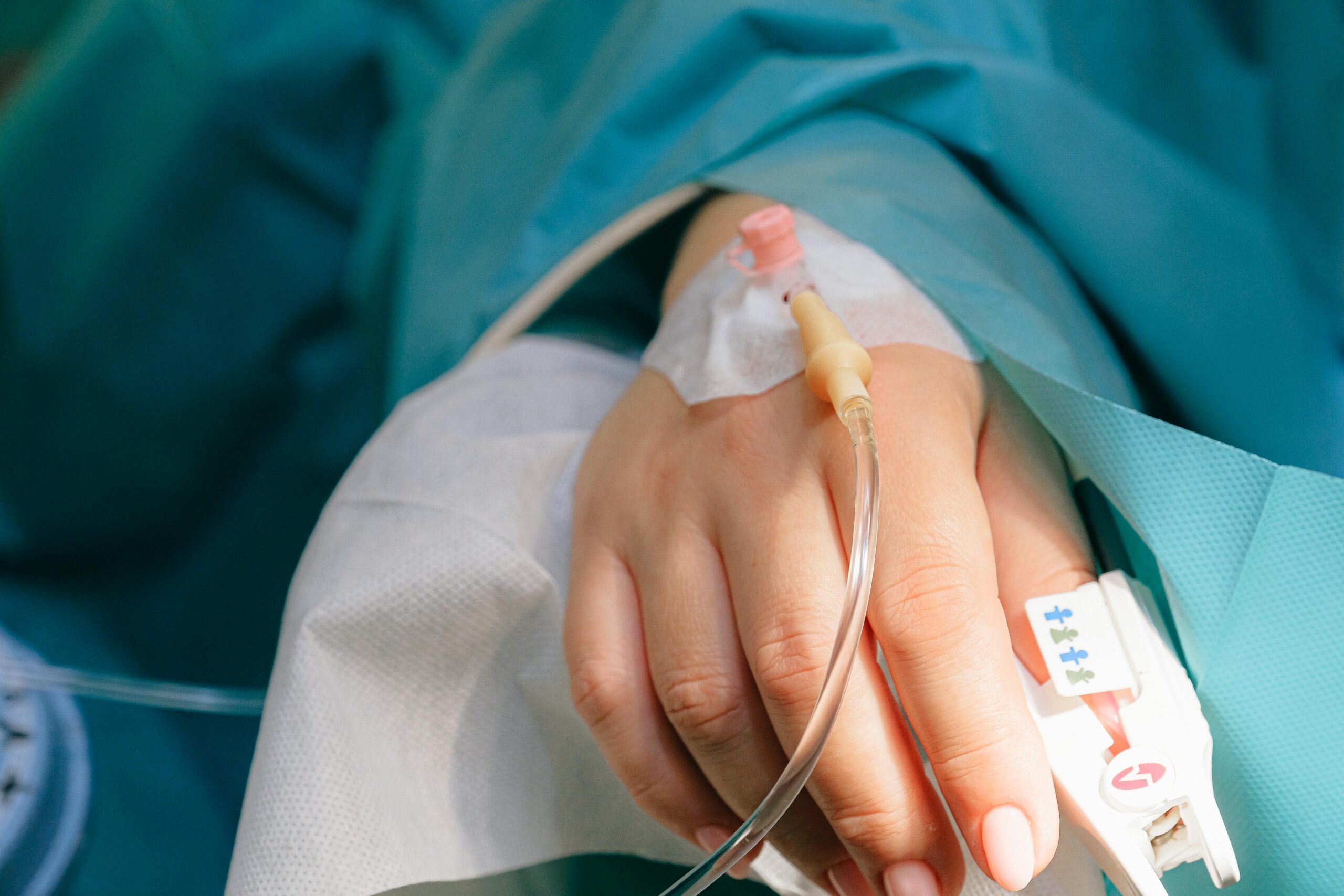
It’s an unfortunate reality that in medical contexts, women’s pain continues to be ignored, overlooked, or treated as an acceptable part of what it means to be a woman and to experience menstruation, pregnancy, and childbirth. Medicine has a long, complicated history of dismissing, downplaying, and normalizing women’s pain, one that is inextricably linked to slavery and anti-Black racism. And yet, today, while there are countless technological and other advances in most areas of medicine, improved outcomes in medical treatments, and longer life expectancies than in the past, we are still dealing with the challenge that women are too often left to endure immense and often avoidable pain and suffering in medical contexts.
The failure to adequately respond to women’s pain is especially salient in reproductive healthcare. For example, endometriosis diagnoses often require seeing multiple providers and can take 7-10 years to obtain. During this time, women’s excruciating symptoms tend to be undermined or attributed to mental illness, hysteria, and other gendered stereotypes. In these contexts, Black and Brown women experience disproportionate harm. Moreover, in standard reproductive medicine procedures like egg retrievals for IVF and IUD-insertions, women are often not warned of the extreme pain involved, are provided inadequate pain management during and after procedures, or are not given any pain management at all. Many clinicians underestimate the painfulness of these procedures and deem pain management unnecessary. In sum, women are expected to just deal with debilitating pain in a variety of context, as if that’s just part of what it means to be a woman. Of particular interest is the agonizing, gendered pain that women experience while undergoing C-sections. As recently reported in Season 2 of the podcast, The Retrievals, 8% of C-section patients in the United States –- which is over 100,000 patients per year –- are able to feel their surgery. In many cases, they literally feel their organs being taken out of their bodies!
In what other context would we think it tolerable for patients to experience that degree of pain during surgery?
The high frequency of pain during the above-mentioned procedures is due to a number of factors pertaining to how women and gender minorities tend to be regarded, or better, disregarded, in medical contexts. There is a harmful a combination of microaggressions, which create environments where women don’t feel comfortable expressing their pain; the credibility gap, where women aren’t considered to be credible knowers about their bodies; cultural health capital, where women (especially low-income women) might be unable to communicate their pain and other needs in ways that are recognized and respected by providers; testimonial injustice, which undermines women’s claims to pain on account of pervasive stereotypes that they are overly emotional or “hysterical”; testimonial smothering which prevents women from speaking up about their pain in the first place out of fear that they’ll be misunderstood or disbelieved; and specifically gendered and racialized pain dismissals which assume that women, especially Black women, have higher thresholds for pain and should just tough it out. Here, we are less interested in further diagnosing the problem of why women’s experiences of pain continue to be ignored and normalized in medical contexts and instead, consider what can – and should – be done about it.
Many argue that in response to this problem, we need to better listen to women, empower them to be stronger advocates for themselves, and encourage them to take responsibility for their health. While we do not disagree with these claims –- of course women should speak up for themselves where possible, and of course health care professionals should listen to them! –- it’s long been the case that such individualistic approaches have not resulted in better outcomes for women. This solution remains insufficient due to the pervasiveness of stereotypes about women being overly emotional, weak, and attention-seeking; controlling images of Black women, and other gendered assumptions and biases about gender, race, and pain that are operative in clinical encounters, which already tend to be hostile to the possibility of hearing their voices. Moreover, patients who arrive at their appointments informed, want more specific information, ask precise questions, or make requests (e.g., for pain management) are often seen as “difficult patients” (a title distributed far more liberally to Black women patients).
A central problem with the “women need to speak up for themselves” approach is that it puts the burden for solving the problem on individual women. Yet individual women lack power in physician-patient dynamics. Individual women implored to “empower themselves” are not going to solve this problem, nor should they be tasked with doing so!
Instead, we need to take a more structural approach and shift the responsibility to physicians and institutions that have personal, professional, and institutional power to make systemic changes that create environments and conditions that facilitate patients’ ability to speak up about their pain and, in turn, actually be heard.
The first step is to better educate healthcare professionals about the serious pain involved in the procedures mentioned above. Though this seems like an enormous first step, the good news is that it is already beginning to happen. In July 2025, the American College for Obstetricians and Gynecologists changed its guidelines to recognize, for the first time, that these procedures can cause real pain, that standard pain management options “have limited or conflicting evidence supporting their effectiveness at providing adequate pain control during in-office gynecologic procedures,” and that patients ought to be informed and given better options. Such guidelines are a crucial first step toward changing institutional culture, attitudes around, and responses to women’s pain.
The second step is to recognize that not all women feel pain the same way. As Dr. Karen Meckstroth, of the Obstetrics, Midwifery, and Gynecology Clinic at San Francisco General, notes, “[t]he way pain is understood and managed by health care professionals is also affected by systemic racism and bias of how pain is experienced. Specific populations, such as adolescents and those with a history of chronic pelvic pain, sexual violence or abuse, and other pain conditions, may also have increased or decreased tolerance of pain and resistance to pain medications.” Careful, compassionate, trauma-informed care must be given to all patients, especially those who are members of marginalized groups.
The third step is to create contexts where women can actually be heard. This can be done by systematically building comprehensive pain-management plans into the standard of care, as opposed to leaving it up to individual providers to offer as, when, and how they see fit. An example of this is what obstetric anesthesiologist Dr. Heather Nixon has implemented in C-section pain management care, a strategy motivated by the common phrase that in medicine, “what’s measured matters.” Combining standardization and measurement, she’s built 15-minute pain checks into all C-section procedures, where anesthesia providers receive automated reminders to obtain a basic pain score from patients at these intervals. Scores of 3 and above trigger prompts for specific follow-up questions about the kind and location of pain, that help determine the best intervention.
The fourth step is to adopt a better system of shared decision-making in clinical settings, one that caters to and is guided by individual patients’ past experiences, thresholds, preferences, and goals. As the 2025 ACOG report notes, “Shared decision making with the patient should be practiced when discussing pain-management options because options that work for one patient may not work for another.” Building upon this approach, the ACOG Committee on Clinical Consensus-Gynecology notes that “[f]uture research on pain and the management of pain must be more racially and ethnically diverse. Studies should include gender-diverse participants, focus on patient preferences and goals, and consider the needs of patients of various ages and those who have a history of trauma.”
These structural and cultural steps to changing how we understand and implement pain management must be incorporated into medical education and training if we want to see effective, lasting changes moving forward. It is significant that national organizations like ACOG have (finally) recognized the seriousness and pervasiveness of the problem and have started implementing these changes. Other medical organizations and institutions must follow their lead.
We can – and should – do more to recognize and respond to women’s pain in healthcare settings. Doing so is a matter of health justice for which we are all responsible.
Lauren Freeman, PhD, is a Professor of Philosophy at University of Louisville.
Heather Stewart, PhD, is an Assistant Professor of Philosophy at Oklahoma State University.