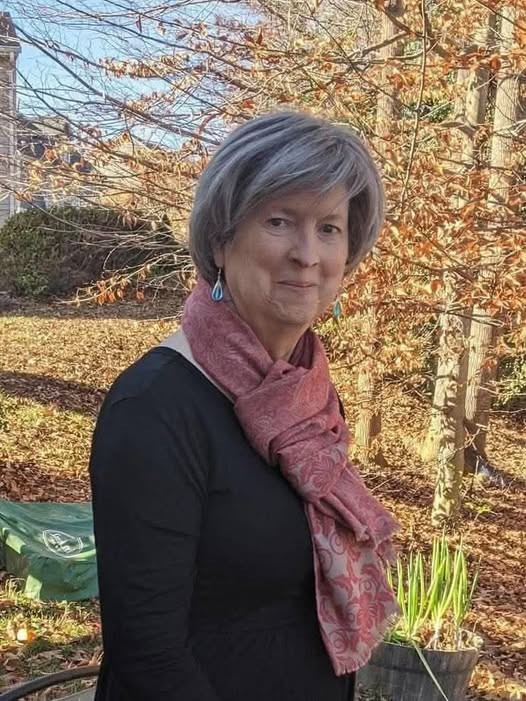
You can easily find Dr. Jamie Nelson’s decades of work and roughly 150 publications. What’s worth finding in them, and more valuable than the number of them, is the sense and sensibility with which that work, and Jamie’s life, was shot through.
In 2009, I sat in Jamie Nelson’s office at Michigan State University, struggling to see my way toward finishing my dissertation. The stumbling block? A profound sense that the work was interesting, perhaps even important, and deeply imperfect with unresolved problems that perhaps I had not even detected yet. I voiced this carefully. I was in fact paralyzed by it. Jamie gestured at the walls of her office, stacked floor to ceiling with bioethics books, philosophy books, and a large number of Jane Austen novels. Reassuring me that it’s ok to not have developed the final perfect approach to a thing, Jamie said, “Do you see all of these? If all of the brilliant and thoughtful authors of these works had solved everything, you and I would be a out of a job.” The aim of our work is not to be a solo explorer staking uncontestable claims, she taught me. The aim is to take part in building a path to a better world, the building of which is itself the making of that better world.
Following Jamie’s own research over the course of her life in philosophy and bioethics, we can see this sort of joyful exploration of ideas aimed always at building a world in which more people can flourish, and especially those people whose needs and labor are too often overlooked by our academic disciplines, our society, and our health care systems. She developed rich work on families and healthcare (often working in tandem with Hilde Lindemann Nelson), on mental health care as a site of problematic interventions that could be made better, on feminist bioethics issues, and on the lives of queer and trans folks in general and in the health care context. This is by no means an exhaustive list. But throughout, Jamie offered clarion calls in plain language to philosophers, clinicians, policymakers, and bioethicists to do better while remaining clear-eyed that people generally are trying to do exactly that and that we need each other’s insights to work together in order to get closer to achieving it.
In her 2014 Hastings Center Report piece, “Medicine and making sense of queer lives,” we see these features. Jamie opened by writing, “As practiced, medicine bumps along with the rest of us, doing its level best to cope with the contingencies of this often heartbreaking world” and went on to acknowledge the difficulties associated with making sense of queerness that “can vex deeply thoughtful people of undoubted good will—as I found out some years ago when I first talked about my efforts to understand my own transgender identity…” This kind of compassion for the difficulties of working through things, though, did not lead Jamie to let people off the hook. It simply led her to better appreciate the nature of the hooks on which we all are hung, as we negotiate them.
Jamie could understand how difficult it is to work through issues of gender and queerness—and the role of the family, and caregiving issues, and mental health care, and a host of deeply human issues—while still holding folks to account. Indeed, her 1998 piece, “The Silence of the bioethicists: Ethical and Political Aspects of Managing Gender Dysphoria” was published long before her own transition and was a call to fellow bioethicists to engage the issue robustly rather than leaving it, a topic she followed up on in her 2012 piece in the Journal of Bioethical Inquiry, “Still quiet after all these years: revisiting ‘the silence of the bioethicists.’”
Jamie offered a model we could all follow for what it can look like to see moral struggle, to see that it is difficult, to acknowledge that the difficulty itself is not an indicator of moral laziness or of immorality, to work through it ourselves, and to nonetheless demand that we all engage in the struggle toward goodness and crafting a better world.
I have pulled on the thread of her work that focused on Jamie’s concerns about how bioethics and clinical health care respond or fail to respond to the needs of queer and trans folks because it so beautifully embodies how Jamie’s intellectual and moral sensibilities worked, and her approach to those from whom she asked more. I assure you that if you now choose to delve into her work on the role of families in health care, or any of her other myriad topics (including the moral psychology of the novels of Jane Austen or the use of Wittgenstein in reflecting on bioethical issues), you will find these sensibilities at work.
In a move whose humility and accuracy make me chuckle to this day, Jamie’s Facebook profile self-descriptor read “Uh… ‘fearless forger of new conceptual structures’ about sums it up.” In summation of a life that exceeds summation, her obituary read, in part, “Jamie lived her life with grace, courage, authenticity, and a wonderful sense of humor.” I’d add to this that she was intellectually generous to her students, her colleagues, and the world while remaining rigorous in almost shockingly gentle ways.
People like Jamie don’t stop asking us to do better just because they take the trouble to understand why it is hard to do so. They keep giving us reasons to do so.
As individuals who knew her, as colleagues who worked with her, or as professionals who never met her, we are better off for the time she was with us. And if we listen, still, to the way she made sense of humanity, if we can adopt the sensibility she brought to bioethics and philosophy, to learning and to mentoring, to witnessing and to urging, we can continue to make the world better than it might have been and to make the making itself gently demanding.
Alison Reiheld, PhD is a Professor at Southern Illinois University-Edwardsville