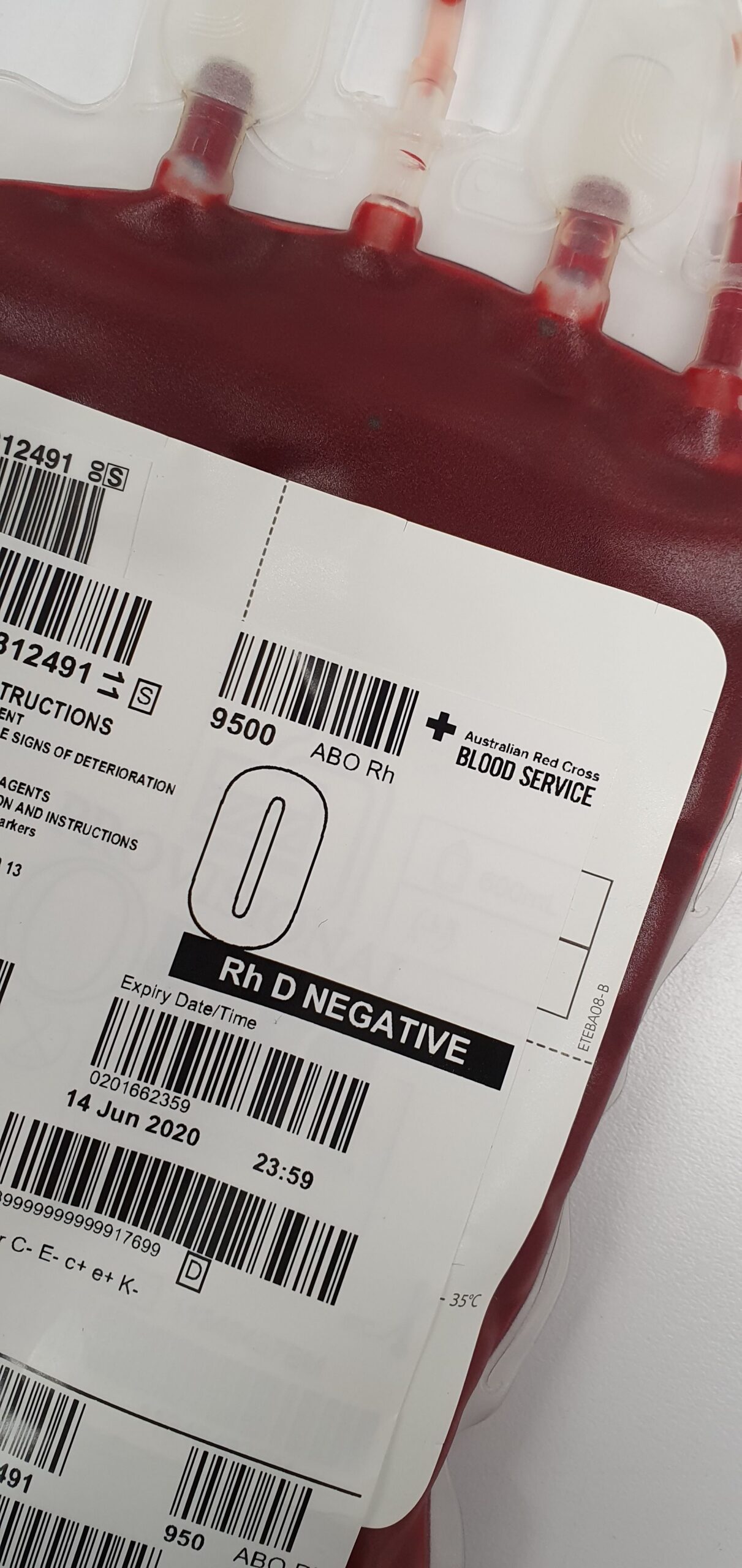
The September 18th, 2026, announcement from the Governing Body of Jehovah’s Witnesses (JW) is one of the most consequential changes to the religion’s medical doctrine in modern times. For decades, JWs were told to refuse transfusion of blood and its four principal components (red cells, white cells, plasma, and platelets). That’s no longer the case. Each JW may now decide, as a matter of conscience, whether to accept those four components from another person, and whether to donate blood so that components can be made for someone else. Whole-blood transfusion is still prohibited.
So, the change is big, but it’s easy to overstate. JWs haven’t abandoned their teaching on blood. What they’ve done is move from a centrally imposed ban on the main therapeutic components of blood to something much closer to individual autonomy.
Refusal of medically recommended blood products has been a major bioethical issue for patients and clinicians for four generations. A JW patient might accept antibiotics, surgery, anesthesia, dialysis, and sophisticated blood-conservation technology, yet refuse a red-cell transfusion that could save their life. Religious liberty, bodily autonomy, clinical judgment, parental authority, and the state’s interest in preserving life repeatedly collided with JW doctrine onblood products. How does a clinician respect their patient’s autonomy and their ethical obligations to support their patient’s life and well-being?
The ethical problem wasn’t just religion versus medicine. The standard principles of bioethics were pulled in different directions depending on the circumstances. Few other communities have such a long legal history attempting to determine what ought to be done and when.
For competent adults, one of the key cases was In re Brooks’ Estate (Illinois, 1965). Bernice Brooks, a JW who had made clear she wouldn’t accept blood, was transfused after a court appointed a conservator to consent on her behalf. The Illinois Supreme Court reversed that authorization. The case became an important statement of the principle that a competent adult’s religious refusal of treatment can’t be overridden just because physicians believe the treatment would save her life.
Children were a different matter, and the groundwork was laid two decades earlier in a case that had nothing to do with medicine.
In Prince v. Massachusetts (1944), Sarah Prince, a JW, was convicted under MA’s child labor laws after her nine-year-old niece and ward joined her in distributing JWs literature. Prince argued that the conviction violated her religious freedom and rights as a guardian. The US Supreme Court disagreed. Writing for the majority, Justice Rutledge acknowledged the weight of family and religious liberty but held that neither is beyond limitation when a child’s welfare is at stake. He noted that the right to practice religion freely “does not include liberty to expose the community or the child to communicable disease or the latter to ill health or death.” Then came the line that’s been quoted in pediatric ethics ever since:
“Parents may be free to become martyrs themselves. But it does not follow they are free, in identical circumstances, to make martyrs of their children before they have reached the age of full and legal discretion when they can make that choice for themselves.“
Prince wasn’t a transfusion case. The JWs’ blood doctrine didn’t even exist yet. But it gave courts the principle they cited repeatedly, once the doctrine was issued. American law drew a firm line between an adult’s right to refuse treatment and a parent’s authority to refuse lifesaving treatment for a child. Under its parens patriae power, the state could step in when a child’s life was at risk.
Niebla v. County of San Diego (1992) shows the dilemma clearly. Angelica Niebla was a JW child whose parents twice objected to a transfusion. Once, at twelve and again at fifteen, San Diego County social workers obtained emergency orders authorizing transfusions. The Ninth Circuit upheld the dismissal of the family’s constitutional claims, recognizing the state’s compelling interest in protecting children from serious medical harm. Niebla ultimately improved without the need for a blood transfusion, but it is well established in law that parental authority would be overridden where the risk of death from lack of a transfusion was present.
What are the true implications of the 2026 change? Before, a JW who needed red cells, plasma or platelets could face a stark choice: accept a treatment their faith prohibited or refuse therapy that might save their life. Now, this historical conflict evaporates for many patients – just like that.
Now, accepting red cells, white cells, plasma and platelets is a matter of personal conscience. The organization says plainly that congregations shouldn’t get involved in the decision and that JWs shouldn’t judge one another for it. Ethically, that matters. The largest impact will be eliminating the pressure some JWs feel over these decisions and reducing the perceived spiritual harm of accepting component blood products. They may no longer have to decide between physicians’ recommendations and community shunning or even excommunication (disfellowshipping). This may also improve shared decision-making, especially in pediatrics, where, before, parents had to decide between spiritual harm and ostracization or their child’s health, often setting up significant conflicts with clinicians and the State. For some, this is now a matter of personal conscience; for others, it changes nothing.
It should not be forgotten that the JW’s blood doctrine has inspired innovations that have reduced blood product need and have benefited society. It is also important to point out that transfusion carries risks of its own. Thus, it is difficult to know how many lives this change may save, as any figure is an epidemiological extrapolation.
A 1993 review of 16 reports covering 1,404 JW surgical patients found that roughly 0.5% to 1.5% of these operations were complicated by anemia, leading to death. A separate analysis of 103 JW patients with severe symptomatic anemia found a mortality of 20.4%, compared with 1.9% in matched patients who were transfused. From these data, analysts derived an estimated excess mortality of about 0.015% of the JW population per year.
Apply that rate to the approximately 9.2 million active JWs worldwide in 2025, and you get approximately 1,380 potentially attributable deaths per year. That figure shouldn’t be read as “1,380 JWs will now be saved.” It’s an extrapolation built on myriad assumptions. Nonetheless, it is fair to interpret that the 2026 change could prevent a few hundred to a thousand or more deaths per year worldwide. The actual number may be lower, both because whole blood is still prohibited and because modern blood-conservation techniques have cut transfusion requirements.
How many lives may have been lost in the 80+ years since the doctrine was articulated? Attempts to calculate that would be based on similar, though likely less reliable extrapolations.
So, while the September 18th decision isn’t a wholesale abandonment of the blood doctrine, it is difficult to overstate its significance. This historic transfer of decision-making power from the church to individuals’ consciences eliminates a greater than 80-year source of conflict. The result of this change is an essentially instantaneous medical autonomy that’s religiously informed.
While the conflict will not disappear completely, for the millions of people who identify as JW, the range of acceptable (life-sustaining) treatments has changed dramatically. Depending on how JWs use their new personal discretion, the impact on future morbidity and mortality is likely to be considerable.
Rafael Escandon, DrPH, PhD, HEC-C is Vice President of Clinical Operations and Research Ethics at Cytokinetics, Inc.
Ian D. Wolfe, PhD, RN, HEC-C is the Director of ethics at Children’s Minnesota