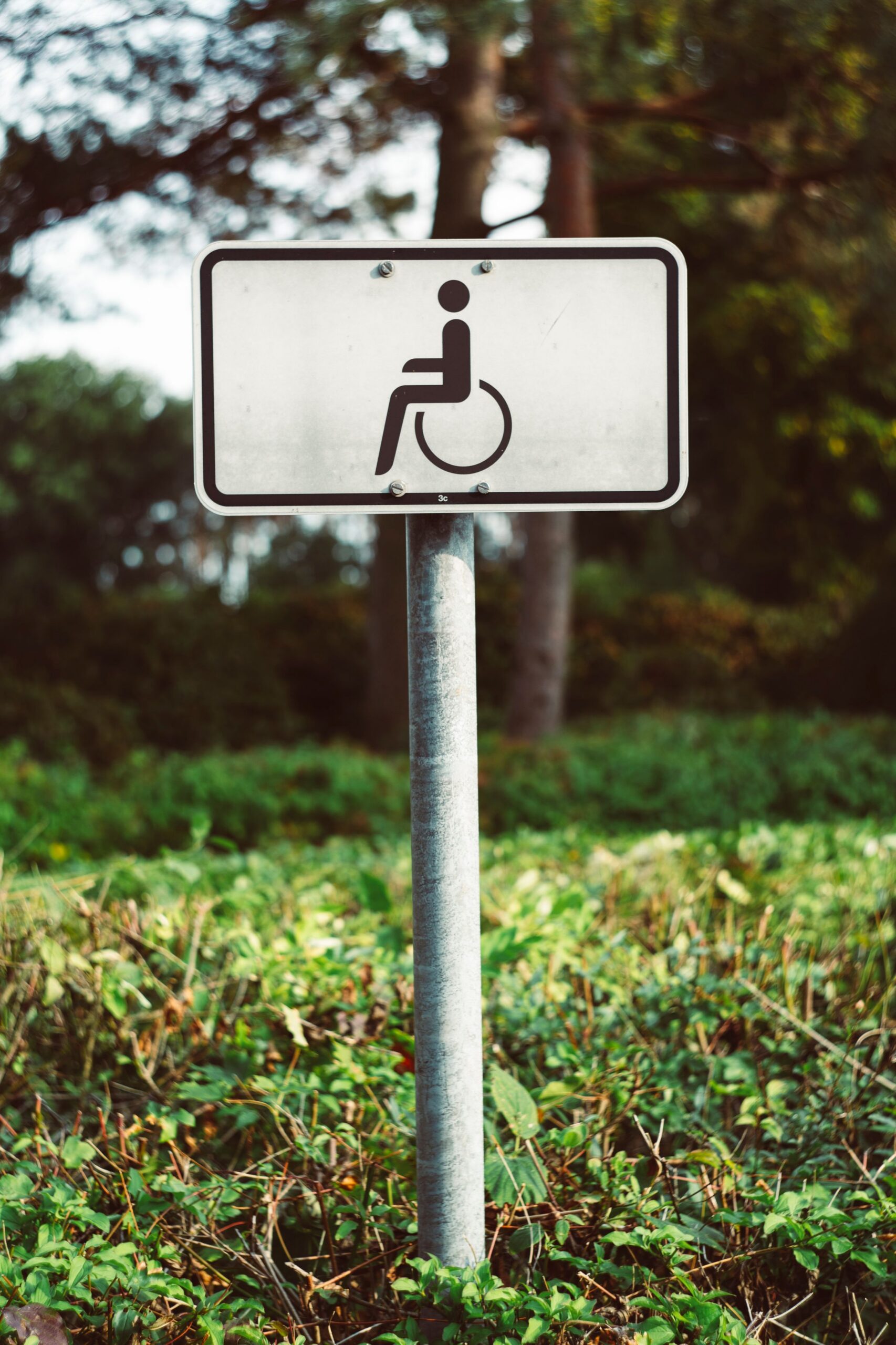
“Because the country was so inaccessible, disabled people had a hard time getting out and doing things—which made us invisible. So we were easy to discount and ignore. Until institutions were forced to accommodate us we would remain locked out and invisible—and as long as we were locked out and invisible, no one would see our true force and would dismiss us.”
― Judith Heumann, Being Heumann: An Unrepentant Memoir of a Disability Rights Activist
With several highly anticipated rulings closing out the Supreme Court’s 2025-2026 term, a recent Department of Justice (DOJ) opinion greatly impacting disability rights has already faded into the background. Notably, the June 18 2026, DOJ slip opinion undermines the integration mandate that ushered in a new era of deinstitutionalization for individuals with disabilities.
In the past, individuals with various disabilities (especially cognitive ones) were routinely institutionalized. Many families could not afford to support disabled relatives. Beyond negligible governmental supports to keep disabled individuals home with their families, social stigma was often insurmountable, arguably because people with disabilities weren’t visible in communities. But then, a legal foundation was established, mandating federally-funded economic support that would reintegrate disabled people within their communities. Now, despite this foundation [Section 504 of the Rehabilitation Act of 1973, the Americans with Disabilities Act (ADA), and the 1999 Olmstead decision by the Supreme Court reading Section 504 and the ADA together], the current administration is arguing that integration is in fact not required, finding that, in Olmstead: “the Supreme Court did not hold that section 504 of the Rehabilitation Act or Title II of the ADA require states to treat mentally disabled patients in the most integrated setting appropriate to their needs.” The message sent by this currently non-binding opinion is that long-relied-upon home and community supports are not guaranteed to those with physical and/or cognitive disabilities, harkening back to the horrors of settings like Willowbrook and other infamous state-run institutions.
To explain the current administration’s stance on disability integration, political scientists might invoke the Overton Window. which states that certain ideas or discourse occupy a certain window of what the public considers acceptable. The community integration mandate seemed to be settled policy. Yet the current administration has sought to shift the Overton Window to a place where unorthodox or even harmful ideas are injected directly into mainstream discourse, in a manner that feels almost like gaslighting. Even though the memo doesn’t change the aforementioned laws, it clearly signals that the current administration does not support the spirit, if not the letter, of those laws. As one disability lawyer stated:
Many in the disability rights community are concerned that the current administration’s lack of support for community integration may lead to the re-institutionalization of some disabled individuals and to a limitation on access to a range of community and home supports. The administration’s argument is that it’s better to leave these decisions to the states to craft policies “encouraging civil commitment of individuals with mental illness who pose risks to themselves or the public or are living on the streets and cannot care for themselves.” Leaving this to the states will create a patchwork of policies where some states may not vigorously enforce the integration mandate and ultimately may reduce or limit efforts to sustain, improve and/or create community supports.
Ethically, this is deeply concerning. Recall a time in our not-so-distant past when the application of integration policies was left up to states, rather than federally protected. How a person was treated–what spaces they could access, where they sat on a bus, what drinking fountains they could use–was largely determined by where they happened to live. The motivation behind integration policies for disabled individuals is similar to the motivation behind the Civil Rights Movement: separate is not equal, and diversity is a component of human difference worth celebrating, not locking behind closed doors, hidden from view.
Proponents of the disability justice movement have long argued that disability is a mere, not a bad, difference, just like a person’s racial identity. Being a racial minority, or being disabled, is stigmatized only insofar as societies are racist or ableist. Treating minoritized individuals as morally and legally on par with those in the majority (or with those in power) reflects a fundamental commitment to equality and to social justice more broadly. Further, diversity is unavoidable. Dozens of cultures, races, sexual and gender identities, and abilities come together in the United States, and at this point, erasing that diversity hardly seems desirable, let alone likely.
For those with the sorts of disabilities that could lead to re-institutionalization, speaking up and speaking out is not an option. Individuals with cognitive, intellectual, developmental, and psychiatric disabilities are particularly vulnerable because they have disabilities that impact their ability to live independently, to speak for themselves, and to understand and apply laws that might protect their rights. Many do not even have recourse through voting. Insofar as we have a duty to protect vulnerable members of our communities, like children and the elderly, we also have a duty to protect people with the sorts of disabilities that make them more dependent on societal supports than the average person.
If virtuous motivation isn’t enough for some to be alarmed by the DOJ’s June 18 memo, consider the fact that any of us can become disabled at any point. Acquiring a disability is not uncommon, with 1 in 4 individuals having a disability at some point in their lives. By this line of reasoning, we all have reason to fear a potential threat to our federally protected rights to accommodation and integration within our communities. Plus, improving communities for those with disabilities improves the community for all. Subtitles, elevators, curb cuts, and bus lifts are just a few of the ways that community changes for people with disabilities benefit everyone.
Finally, consider the value of autonomy. We all want to make our own choices about what we do, who we spend time with, where we live, and how we engage with our communities. Home and community supports ensure disabled people can develop meaningful relationships within their communities and self-determine to the extent of their abilities. Existing legislation protects education, housing, employment, and social participation. Undermining these laws would deny individuals fundamental rights to privacy, association, and, more broadly, their autonomy. If we want to be the type of society that values its members and their diversity, that pushes back against the idea that separate spaces for different types of people are acceptable, and that protects the vulnerable amongst us, we must push back against the ideology promoted by the June 18 DOJ slip opinion.
Ally Peabody Smith, PhD, is an Assistant Professor in the Department of Population Health at Lehigh University.
Nanette Elster, JD, MPH, is a Professor at the Neiswanger Institute for Bioethics, Loyola University Chicago Stritch School of Medicine and is the John B. Francis Co-Chair in Bioethics at the Center for Practical Bioethics.
Kayhan Parsi, JD, PhD, is Professor and Graduate Program Director at the Neiswanger Institute for Bioethics, Loyola University Chicago Stritch School of Medicine and is the John B. Francis Co-Chair in Bioethics at the Center for Practical Bioethics.