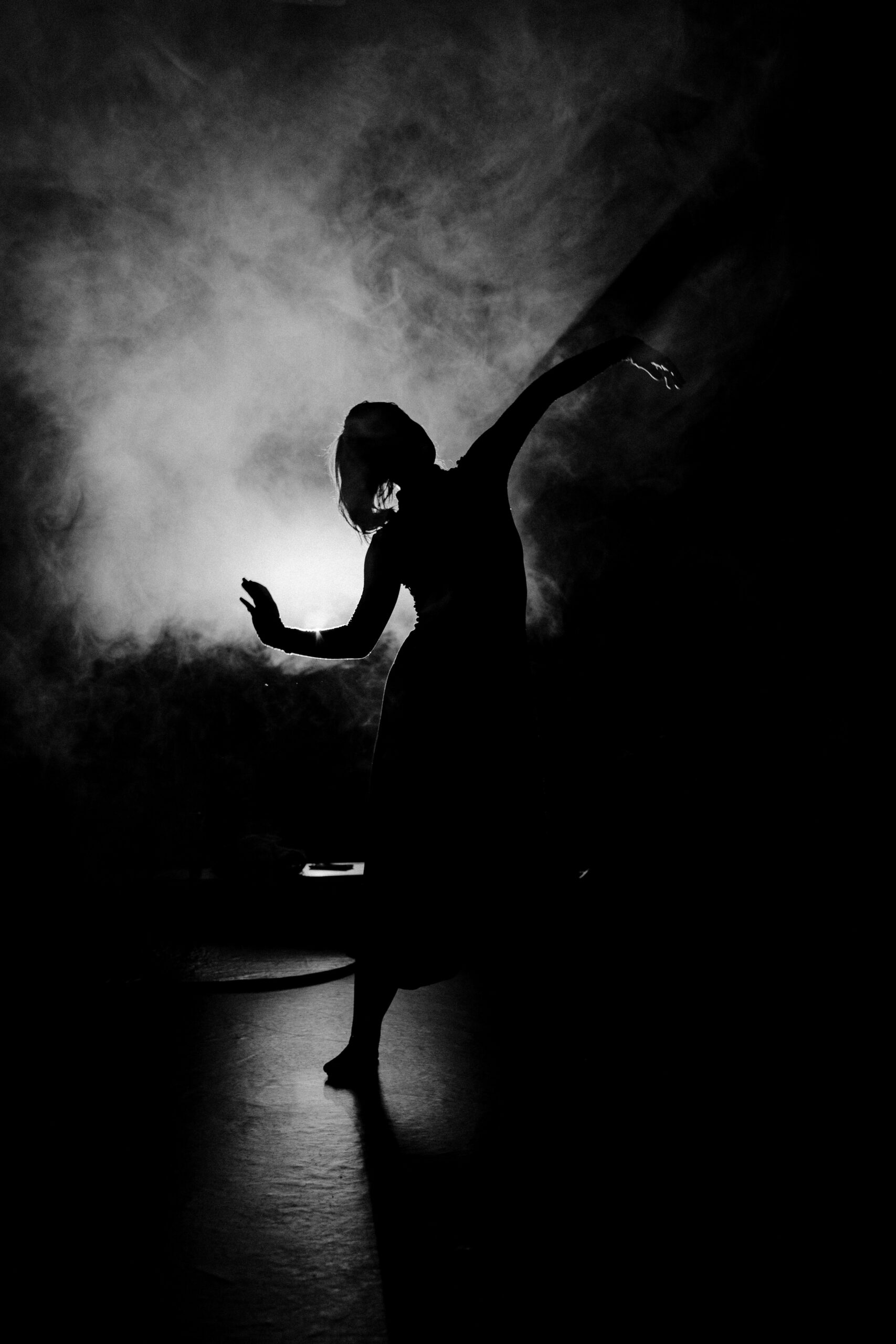
What if, instead of another conference panel, bioethicists hosted an exhibition, curated a playlist, staged a performance, or collaborated on a short film?
What if our work did more than explain and evaluate ethical problems? What if it also moved people, unsettled assumptions, and made unfamiliar experiences more difficult to ignore?
Our field has developed powerful tools for identifying values, clarifying concepts, evaluating arguments, and guiding decisions. It is also an applied field, with bioethicists regularly working alongside clinicians, researchers, policymakers, patients, and communities.
These analytic and practical contributions remain essential. But they are not enough.
Bioethics should become more open to artistic and creative practices, not simply as ways of communicating conclusions already reached, but as methods for exploring ethical questions.
Old Habits in a Young Field
Modern bioethics emerged largely within universities, hospitals, and research institutions. Unsurprisingly, it adopted their dominant forms of knowledge production: scholarly articles, books, conference presentations, lectures, reports, policy briefs, and committee recommendations.
These forms work. They allow us to develop careful arguments, scrutinize evidence, and communicate with professionals and decision-makers. Bioethicists have become particularly adept at meeting scientists, clinicians, and policymakers on their own institutional terrain, providing the arguments and documents needed to reshape policy or practice.
Yet these forms also impose limits. They tend to privilege explicit argument over sensory experience and abstraction over emotion. Their audience is primarily professional. Even when bioethicists study decisions that profoundly affect patients, research participants, caregivers, and communities, our work often remains inaccessible to many of them.
Making an academic argument shorter or adding an infographic does not necessarily change how the ethical issue itself is understood. Creative practices can.
Art as a Method of Bioethics
Art is often treated in academic settings as illustration, enrichment, or outreach, something added after the serious intellectual work has been completed. That misses its ethical and epistemic potential.
A story can place an audience inside a conflict rather than leave it observing from a distance. A photograph can make structural exclusion visible. Theatre can expose the competing responsibilities embodied in a clinical encounter. Music, dance, and poetry can communicate vulnerability, dependence, fear, grief, or moral distress in ways that resist reduction to propositions.
Such works do not merely generate feelings about ethical issues. They can reveal dimensions that conventional analysis has overlooked. They can shift whose experiences become visible, what counts as relevant knowledge, and which questions appear worth asking. They can also support the agency and presence of people too often relegated to the role of passive subjects.
This is not an argument against analysis. Creative work without critical reflection can reproduce stereotypes, sentimentalize suffering, or substitute emotional impact for ethical judgment. But conventional bioethics also has characteristic failures. It can flatten lived experience, treat social power as contextual background, and assume that what can be clearly stated is all that matters ethically.
The medical and health humanities have long treated literature, visual art, performance, and other creative practices as credible and legitimate ways to understand illness, care, disability, and professional life. These fields developed in part because analytic arguments alone could not capture the full complexity of health and illness, and bioethics has much to learn from both their successes and their challenges.
The point is not to choose between creative and analytic approaches, but to recognize that each can correct some of the other’s limitations.
Creating Institutional Space
For more than a decade, the Canadian Journal of Bioethics / Revue canadienne de bioéthique has invited visual art, fiction, poetry, film criticism, and other creative works through its Arts, Culture and Creative Works section. Other journals have created related spaces for non-traditional forms of bioethical inquiry. Narrative Inquiry in Bioethics, for example, explores bioethical questions through personal stories, qualitative research, and case studies that leverage rich descriptions of human experience to help deepen ethical understanding.
In 2016, an Art + Bioethics project paired emerging artists with junior bioethics scholars, culminating in both a gallery exhibition and a journal collection. The point was not to decorate articles with attractive images. Artists and bioethicists worked together on shared questions, bringing different methods, assumptions, and forms of attention to the collaboration. The artworks and bioethics texts informed one another, shaping both the final works and their meaning.
Similar possibilities are emerging in bioethics education and graduate research. Students increasingly use graphic narratives, speculative fiction, visual media, performance, and participatory artistic activities to investigate ethical questions and engage communities. Their work shows that creative practices can be integrated into serious conceptual and empirical research rather than relegated to extracurricular communication.
But isolated experiments are not enough. Journals, graduate programs, research centers, and funders must create legitimate space for this work.
Creativity Still Requires Rigour
Opening bioethics to artistic practice requires standards appropriate to different forms of inquiry.
This challenge became clear in a 2016 research project entitled Responsible Conduct in Research-Creation: Providing Creative Tools to Meet the Challenges of an Emerging Field. Many conventional research norms had emerged from the empirical sciences and did not translate neatly into artistic settings, including forms of “punk ethics” intended to destabilize audiences. At the same time, artistic freedom did not eliminate responsibilities concerning consent, collaboration, attribution, power, harm, or accountability. The resulting research-creation toolbox treated differences in methods and objectives as matters requiring explicit discussion and ethical judgment, rather than the imposition of a general set of rules.
Creative bioethics requires the same seriousness. Who has the authority to represent an experience? Who controls the resulting work? How are collaborators credited? When does provocation become exploitation? How should audiences participate? What obligations arise when a project makes suffering visible?
Art can empower, but it also creates new forms of ethical responsibility for bioethicists.
Expanding What Bioethics Can Do
Not every bioethicist should become a painter, novelist, or performer. That would be both unrealistic and exhausting. The more reasonable invitation is to collaborate and experiment.
Journal editors can create space for creative scholarship and recruit reviewers able to evaluate it fairly. Supervisors can support students who want to integrate artistic practices into their research. Funders and universities can recognize exhibitions, performances, films, graphic works, and community-based creations as substantive research contributions. Practising bioethicists can consider whether stories, images, performance, or participatory activities might enrich engagement with patients, professionals, and communities.
The people affected by bioethical decisions do not primarily encounter them through journal articles. They understand ethical problems through bodies, relationships, images, stories, institutions, and emotions, as well as through arguments.
Bioethics already asks how we should live together amid vulnerability, technological change, unequal power, and competing ideas of the good. Creative practices allow us to encounter those questions differently. They can make abstract issues tangible, disrupt familiar categories, and bring neglected experiences into view.
Bioethics should continue to analyze, deliberate, and advise. But it should also make, perform, imagine, and create.
We should not only explain why ethics matters. We should help people see, hear, and feel what is at stake.
Bryn Williams-Jones, PhD, is professor and director of the Department of Social and Preventive Medicine, School of Public Health, Université de Montréal.