As individuals concerned with ethics in science, medicine, and public health, we wish to express our dismay at the approach taken by Senate leaders to pursue an unwarranted, ill-advised, and frankly bizarre vendetta against a scientist, Dr. Anthony Fauci, rather than making a sincere effort to learn from the painful experiences of the pandemic to improve national preparedness. No human is perfect, but Dr. Fauci deserves appreciation for his decades of service to American science, and he deserves respect for taking on the difficult work of advising federal policy makers during the worst plague of this century. We condemn the decision to hold him legally in contempt of Congress as the outcome of a staged public persecution, and we fear the future implications of politically and legally targeting scientists who advise the government.
Policy makers have an ethical obligation to gather information and learn from experience, and there is much to be learned from the pandemic response, both good and bad. There are legitimate ethical and scientific questions to be asked about the safety and utility of viral gain of function research, the effectiveness of various public health policies, and more. But bringing Dr. Fauci to the Senate under conditions of repeatedly threatened prosecution, thereby forcing him to invoke his fifth amendment rights, serves neither to obtain information nor learn lessons.
If the Senate wished to hear from Dr. Fauci and learn how to be better prepared for the next pandemic, they could have provided him with Use Immunity, and he would not have invoked his 5th Amendment right to decline to answer questions, even in the face of prior threats of prosecution. But they chose not to do so, showing that neither protecting the public from future pandemics nor learning were the aims of the hearing.
Some Senators instead used the hearing as a blunt warning to other physician-scientists to avoid public service or risk being ensnared in a political and legal trap like the one laid for Dr. Fauci.
Dr. Fauci’s lifetime of service is well-documented. He served 7 U.S. presidents—Republicans and Democrats alike. He led the National Institute of Allergy and Infectious Diseases (NIAID) for nearly 4 decades. He has received numerous honors, including honors from President Trump for his efforts on the COVID vaccine program, Operation Warp Speed. His career has been built on research integrity, pursuing answers to important questions, and an unwavering commitment to bettering all people’s lives.
During the COVID-19 pandemic, Dr. Fauci was, as always, an advisor to policymakers, but he also became the public face of the federal government’s response. As such, he fought to maintain credibility for sound science and evidence-based COVID responses, sometimes eliciting the ire of those with differing views. But as he had done throughout his long career, he worked with a wide range of scientists and sought to make the best recommendations he could to policymakers under evolving, uncertain, and frightening conditions.
The proper way to investigate the origins of COVID, or any other question about the pandemic and the nation’s responses to it, is through rigorous scientific inquiry, which can then inform policies. Staged, political hearings with predefined scapegoats teach nothing, and using criminal law rather than scientific inquiry to answer scientific questions is damaging.
Signatures,
List of 130 signatories can be found here: Fauci Support Letter (Responses)
(University titles and other affiliations are for identification only, no institutional endorsement is made or implied by signatories)
Arthur Caplan1, Matthew Wynia2, Dominic Sisti3, Lainie Ross4
- New York University, Grossman School of Medicine
- University of Colorado, Center for Bioethics and Humanities
- University of Pennsylvania, Perelman School of Medicine
- University of Rochester Medicine
Corresponding author: Matthew Wynia, University of Colorado Center for Bioethics and Humanities
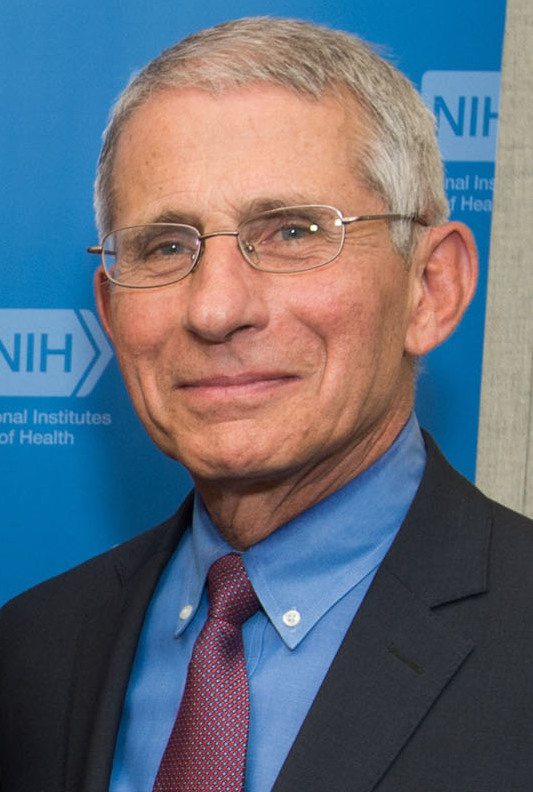
(Photo Credit: NIH Image Gallery from Bethesda, Maryland, USA, Public domain, via Wikimedia Commons)