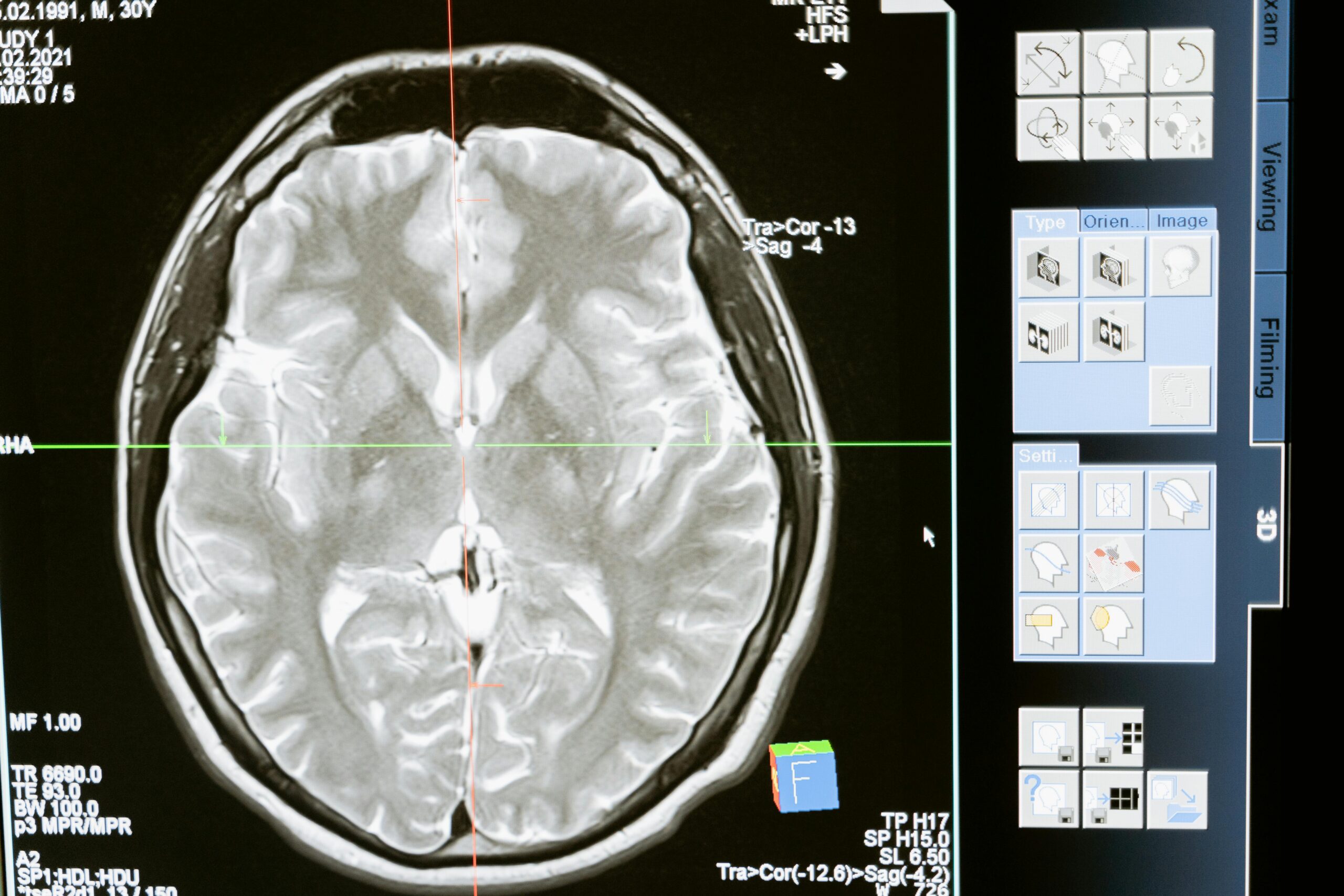
There is growing research interest in the prevalence of moral injury – a profound psychological harm caused by judgments which deviate from what an individual or society views as “right” – among those who have been exposed to trauma, such as veterans and survivors of abuse. However, what makes a judgment “moral”? Philosophers have long approached this question through frameworks such as virtue ethics, which emphasizes the character and intentions of the agent; deontology, which focuses on the rightness or wrongness of the action itself; and utilitarianism, which emphasizes the consequences of an action. These traditions offer powerful ways to think about ethics, but they do not fully explain the rapid, everyday moral intuitions we use to navigate social life. At the Center for Brain and Behavior Research in the Sanford School of Medicine at the University of South Dakota, in collaboration with the NeuroComputational Ethics Research Group at North Carolina State University, our interdisciplinary team is using non-invasive brain stimulation to examine the neural systems that support moral judgment in order to better support individuals affected by moral injury.
To investigate the “moral brain,” we use transcranial magnetic stimulation (TMS), a non-invasive technique that uses magnetic pulses to influence activity in targeted cortical regions. Depending on how it is delivered, TMS can temporarily increase or decrease neural activity. In our current study, we use inhibitory stimulation to briefly reduce activity in specific brain hubs, creating a temporary and reversible “virtual lesion.” This approach allows us to ask whether moral judgments shift when a particular brain region is less active.
Our research is guided by the Agent-Deed-Consequence (ADC) model, which proposes that moral judgments draw on three separable sources of information: the agent who performs an action, the deed itself, and the consequences that follow. These components map broadly onto longstanding philosophical perspectives, but the ADC model also provides a framework for testing how the brain integrates them in real time. Participants read brief moral scenarios in which information about the agent, deed, and consequence is systematically varied, and they are asked to make judgments about the moral status of each component.
To measure the brain’s response during these judgments, we combine TMS with high-density electroencephalography (EEG) and eye-tracking. EEG records electrical activity from sensors placed on the scalp, allowing us to measure how brain activity changes from moment to moment as participants evaluate each scenario. This approach is inspired by prior work suggesting that the brain may process intentional deeds and downstream consequences differently: actions may elicit relatively rapid evaluative responses, whereas consequences may require more sustained cognitive integration. Our study tests whether temporarily reducing activity in specific brain regions changes how people weigh agents, deeds, and consequences.
We focus on two neural hubs:
- The temporoparietal junction (TPJ). The TPJ is closely associated with theory of mind, or the ability to infer other people’s beliefs, intentions, and mental states. In the ADC framework, this makes the TPJ especially relevant for evaluating the agent—the person who performs an action and the motives or intentions attributed to that person.
- The dorsolateral prefrontal cortex (DLPFC). The DLPFC is involved in executive function, cognitive control, and rule-based reasoning. We associate this region with the deed component because it may support evaluations of whether an action violates rules, obligations, or moral principles. In addition to the TPJ, the DLPFC likely contributes to evaluating outcomes and integrating contextual, social, and cognitive information.
By integrating behavioral ratings, EEG, and eye-tracking, we are beginning to map how these regions contribute to moral judgment. Preliminary data (n=28) suggest that inhibiting the TPJ may alter how participants judge the immorality of agents relative to control stimulation. EEG analyses also show changes in alpha-band event-related spectral perturbation (ERSP) when participants evaluate an agent’s character. Because alpha-band activity is often associated with changes in cortical engagement and inhibitory control, these findings may indicate that stimulation shifts the neural processes participants use when evaluating social and moral information. Such results enable researchers to understand interindividual differences in moral decision-making and account for changes in intuition, especially for those afflicted by moral injury.
These findings have implications beyond the laboratory. By identifying how specific brain regions impact moral decision-making according to the ADC model, this work can help clarify the neural basis behind disrupted moral and social judgment among various populations in need. In other words, these findings over the long term could inform interventions for people affected by neurological injury or trauma where disruption of prefrontal or parietal networks may contribute to changes in personality, social behavior, or decision-making. Interventions would target these networks in order to help persons avoid self-harm, exhibit more empathy and tolerance towards others, and maintain personal accountability for moral decisions. TMS can, essentially, offer a clinical pathway towards moral repair.
As we refine our understanding of the neural architecture of moral judgment, we move closer to identifying the brain systems that support ethical decision-making and to developing more targeted approaches for people whose social and moral reasoning has been altered by brain injury or disease.
Michael Pflanzer,1 Jamie Scholl,2 Shaun Respess, 1 Lee Baugh2 and Veljko Dubljevic1*
- North Carolina State University
- University of South Dakota
*Corresponding author